
One description, not five calls
Explain the affected area, what you've noticed, and any recent leaks once. We connect you with a local contractor who handles this type of job.
Serving Naperville, Illinois & surrounding areas
Calls answered around the clock
Mold removal · Naperville, Illinois
Describe what you're seeing once and we'll connect you with a local contractor who handles inspection, containment, removal, and cleanup.
CALL NOW: +1 331 281 1144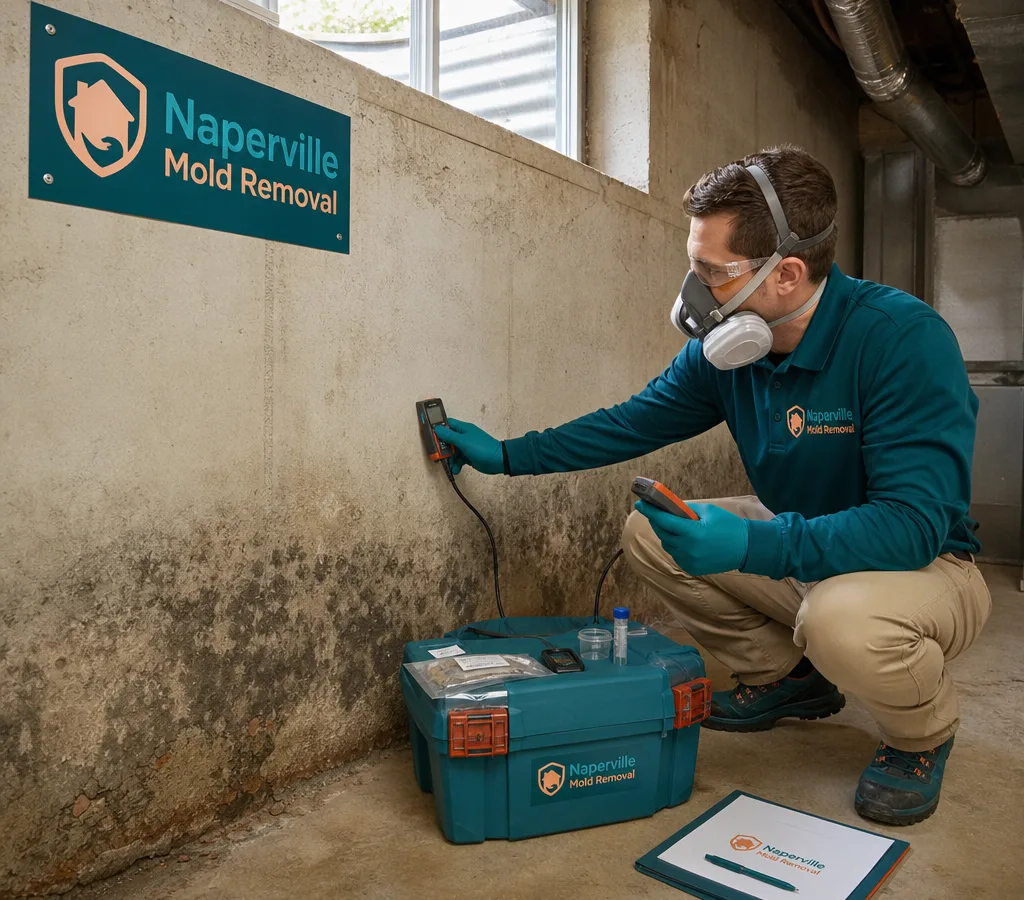
One call starts the connection
When someone searches for mold removal Naperville IL, they usually want two things: stop the spread and make the space safe to use again. Mold cleanup is a process, not just wiping a spot off drywall.
A typical Naperville mold removal job starts by identifying where the moisture is coming from. Mold is a symptom; water is the cause. In Naperville, that often means seepage in basements after heavy rain, a slow plumbing leak behind a vanity, an HVAC condensation issue, or wet building materials after an ice-dam or roof leak.
A local contractor will usually break the work into a few clear phases:
If you're deciding whether you need mold removal or a broader approach, contractors typically scope containment, source control, and cleanup around the conditions they find.
A simpler route to help
Explain the affected area, what you've noticed, and any recent leaks once. We connect you with a local contractor who handles this type of job.
You're connected with an independent contractor who serves Naperville and nearby suburbs, so the conversation starts with local housing and weather realities.
Mold removal can mean cleaning a small, contained area or opening up walls and drying cavities. The contractor can explain what applies to your situation.
Ask about containment, what gets removed, how dust is controlled, how drying is monitored, and what the space will look like when it's ready for repairs.
You speak directly with the contractor, review the plan, and decide whether to proceed.
The removal process
When you call, describe where you see growth or smell mustiness, whether there was a recent leak, and what materials are affected. Mention any occupants with sensitivities so the contractor can plan containment.
We match your details to a contractor who handles mold removal in Naperville. You'll talk through what access is needed, what areas should be checked, and how the job would be staged.
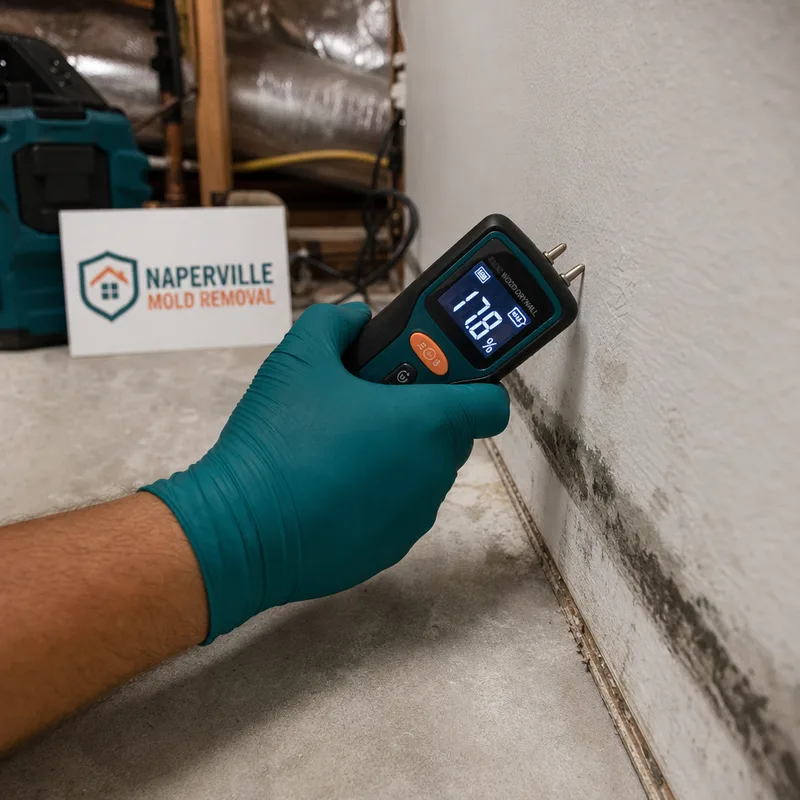
A contractor typically checks humidity, moisture content, and possible source points. You'll hear what needs to be removed versus cleaned and what needs drying.
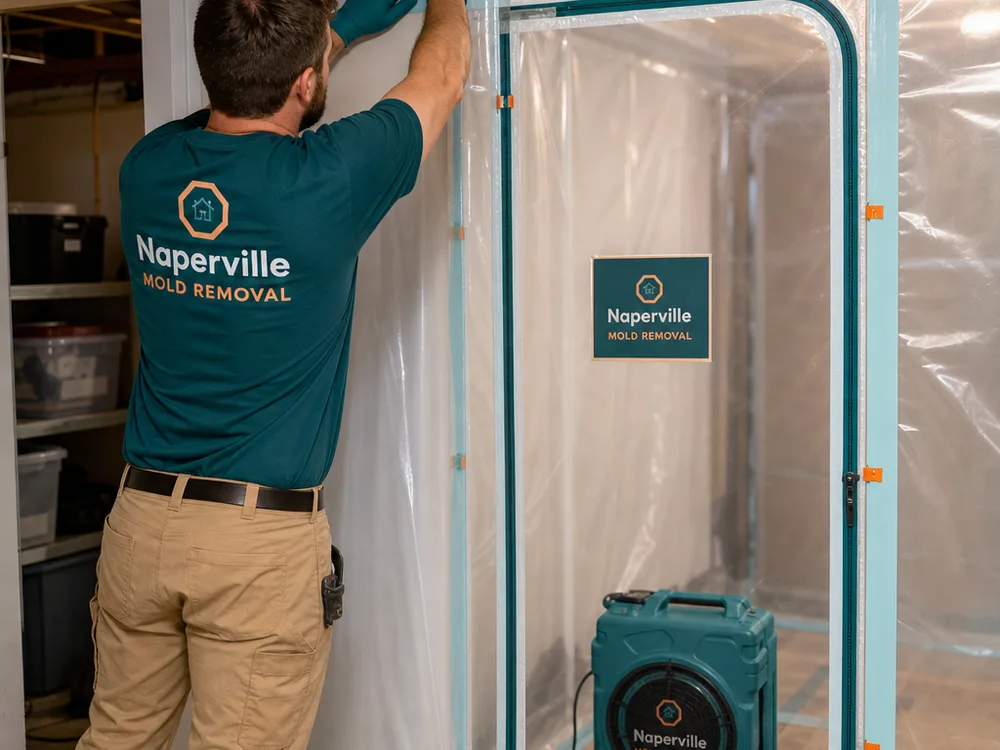
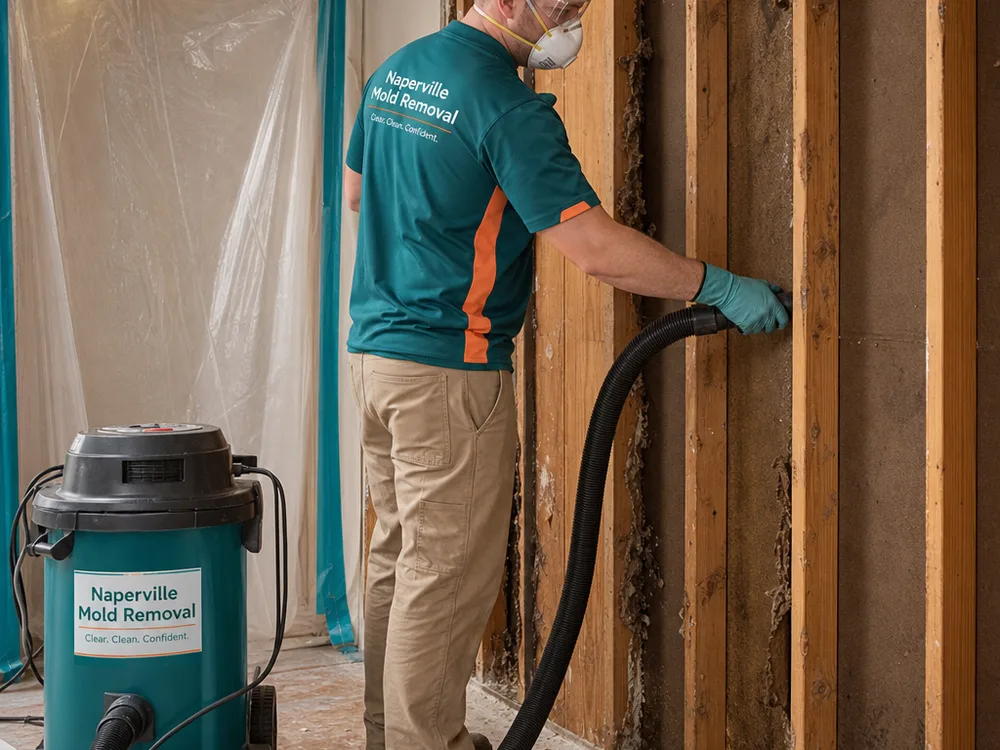
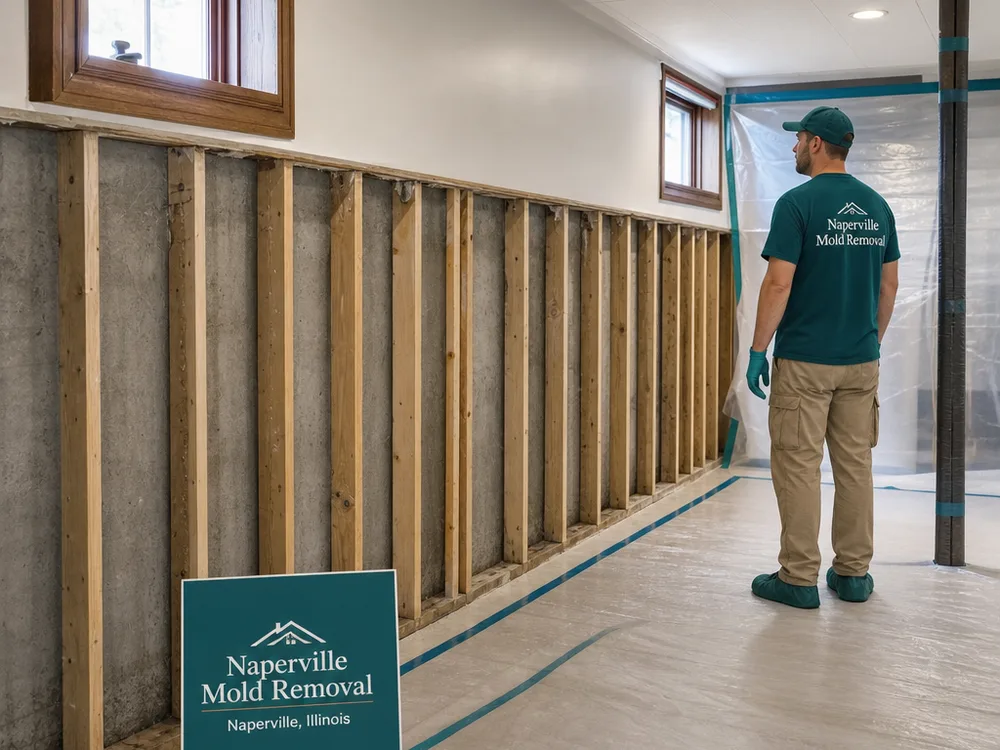
The work area is isolated, contaminated porous materials are removed, and remaining surfaces are detailed with HEPA vacuuming and surface cleaning. Contents may be moved, protected, or cleaned depending on exposure.
Drying equipment may run until moisture readings stabilize. After cleanup, you can discuss rebuild needs such as new drywall, baseboards, or flooring once the structure is dry.
If you're seeing discoloration, peeling paint, or a persistent musty smell, a short phone call is usually enough to get you connected with a local contractor who can assess what's going on and explain the next steps.
CALL NOW: +1 331 281 1144Inside the work area
Questions before you call
Most people mean the same problem: stopping mold growth and making the area safe to use again. Contractors may use “remediation” to describe the full scope, including moisture source control, containment, removal, cleaning, and drying, while “removal” often refers to the physical cleanup portion.
Leave the area as undisturbed as possible and avoid running fans that blow from the affected room into the rest of the house. If it's safe, take a few photos, note when you first noticed the issue, and write down recent events such as a plumbing leak, overflow, or storm-related water intrusion.
Share the location, approximate size of the affected area, material involved, and what you think started it. If a room is finished or hard to access, mention that too.
If mold is on porous materials or inside a wall cavity that stayed wet, removal is common because those materials are hard to clean thoroughly. A contractor will look at moisture depth, insulation, and the backside of drywall before recommending what needs to come out.
Containment is typically built with plastic sheeting and controlled airflow so dust and spores stay in the work zone. HEPA-filtered air scrubbers and careful bag-out practices are commonly used, especially when drywall or insulation is being removed.
A musty odor often points to hidden damp materials behind baseboards, under flooring, or in a wall cavity near plumbing. The contractor may use moisture mapping and targeted access openings to locate the source area rather than guessing based on smell alone.
Mold can return if the moisture problem is still present or humidity stays high. Ask the contractor what they believe the moisture source is and what repairs, ventilation, drainage, or dehumidification changes may be needed to keep materials dry after cleanup.
One call starts the connection
Call Naperville Mold Removal, describe what's going on once, and get connected with a local contractor who can inspect the area and walk you through containment, removal, and cleanup options.